
Bookkeeping services for small businesses consist of the meticulous recording, organization, and management of financial transactions. They play a vital role in ensuring that businesses maintain an accurate financial picture, comply with regulations, and make informed decisions. Distinct from bookkeeping, related services include accounting—which involves analyzing financial data—tax preparation, which ensures adherence to tax laws; payroll services for managing employee compensation; audits for validating the accuracy of financial statements; and financial advice for strategic guidance. Recognizing these differences is crucial for small business owners, as effective bookkeeping establishes a foundation for financial health and long-term growth.
What Are Bookkeeping Services? Tasks, Benefits, and How They Work
Bookkeeping is fundamental for small businesses as it provides a methodical approach to managing financial records. A bookkeeper's primary responsibilities encompass tracking daily transactions, managing accounts payable and receivable, reconciling bank statements, and ensuring accurate financial reporting. These key tasks yield a comprehensive view of the business's financial health.
Utilizing bookkeeping services enhances financial management, allowing business owners to monitor performance trends over time. Furthermore, access to accurate financial reports enables informed decision-making and effective strategic planning. The anticipated outcomes of proficient bookkeeping include improved organizational efficiency and enhanced financial accuracy—elements essential for the success of small businesses. With clear and concise records, small business owners can comply with legal mandates and gain insights that foster future growth and sustainability.
Common Deliverables of Bookkeeping Services
Bookkeeping services offer vital deliverables that significantly influence the financial well-being of small businesses. Key services include transaction categorization, which simplifies income and expense tracking by assigning transactions to specific categories, facilitating a keen understanding of spending habits. Reconciliation ensures that business accounts align with bank statements, minimizing discrepancies that could result in missed payments or inaccurate reporting. Accounts payable and receivable support provides effective cash flow management, ensuring timely payments to suppliers and prompt collections from customers. Monthly closing activities, which involve summarizing and reviewing accounts, help maintain long-term accuracy. Lastly, financial report generation, including profit and loss statements and balance sheets, delivers essential insights necessary for informed decision-making and regulatory compliance.
For instance, a small café can leverage these insights to identify the most profitable menu items, ultimately guiding inventory management and pricing strategies. By focusing on these deliverables, small businesses can maintain accurate financial records while adhering to regulatory frameworks, which is vital for fostering growth and stability.
Differentiating Bookkeepers from Accountants and Software
In the realm of financial management, bookkeepers, accountants, and Certified Public Accountants (CPAs) fulfill distinct roles. Bookkeepers primarily manage daily financial transactions, ensuring proper record-keeping and organization of financial data; they may also assist with invoicing and payroll functions. Accountants analyze this data, prepare financial statements, and conduct audits, while CPAs provide a range of additional services, including tax advice and business consulting, which necessitates passing a licensing exam and ongoing education.
For small businesses, bookkeeping software simplifies these processes, allowing owners to track expenses and manage financial records without requiring extensive accounting knowledge. Businesses might choose bookkeepers for routine financial tasks to free up valuable time, accountants for in-depth financial analysis, and CPAs for complex financial guidance or tax preparation. Understanding these roles aids small businesses in aligning their specific needs with appropriate financial support, thereby minimizing confusion about responsibilities.
Bookkeeping Service Provider Models Comparison
DIY Software
DIY bookkeeping software provides basic financial management tools that allow businesses to handle simple tasks independently, such as invoicing, expense tracking, and transaction recording.
- Scope: Basic bookkeeping tasks, including invoice management and expense tracking.
- Pricing Basis: Usually available through subscription plans or one-time purchase fees.
- Response Model: Self-managed, with users handling their own bookkeeping activities.
- Oversight: Minimal oversight; accuracy depends on the user’s knowledge and consistency.
- Software Access: Users install and manage the software while controlling their own financial data.
- Scalability: Limited scalability, as manual management can become challenging as business needs grow.
- Best Fit: Small, technology-comfortable businesses with simple bookkeeping requirements.
Freelance Bookkeeper
Freelance bookkeepers provide customized bookkeeping support based on a business’s specific financial needs.
- Scope: Personalized bookkeeping services tailored to individual business requirements.
- Pricing Basis: Usually charged through hourly rates or project-based fees.
- Response Model: Generally responsive to client questions and requests, depending on availability.
- Oversight: Limited oversight because service quality depends largely on the individual bookkeeper’s experience and processes.
- Software Access: Varies by provider; many use common accounting platforms and bookkeeping tools.
- Scalability: Moderate scalability, with flexibility to adjust services as business needs change.
- Best Fit: Small and medium-sized businesses looking for personalized financial support.
Local Bookkeeping Firm
Local bookkeeping firms provide broader financial services, often combining bookkeeping with accounting support and tax-related assistance.
- Scope: Comprehensive bookkeeping services, including financial record management, reporting, and tax preparation support.
- Pricing Basis: Typically offered through monthly retainers or packaged service plans.
- Response Model: Provides scheduled reviews and timely responses through a dedicated team.
- Oversight: Stronger oversight compared with individual providers because multiple professionals may review financial work.
- Software Access: Often includes access to firm-supported accounting software and client portals.
- Scalability: Highly scalable, with the ability to support businesses as financial needs become more complex.
- Best Fit: Established businesses requiring structured financial management and ongoing oversight.
Online Managed Bookkeeping Service
Online managed bookkeeping services provide remote, full-service bookkeeping support through cloud-based systems and dedicated teams.
- Scope: Complete bookkeeping management, including transaction tracking, reporting, and ongoing financial organization.
- Pricing Basis: Usually based on monthly subscription plans.
- Response Model: Provides fast communication through dedicated support teams and online platforms.
- Oversight: Regular oversight through team-based workflows and standardized processes.
- Software Access: Uses cloud-based accounting platforms without requiring businesses to install or manage software themselves.
- Scalability: Highly scalable, allowing services to expand as businesses grow.
- Best Fit: Startups and growing companies seeking hands-off bookkeeping management.
In-House Bookkeeping Employee
An in-house bookkeeper works directly within a company’s operations and manages financial tasks internally.
- Scope: Daily bookkeeping activities integrated into business operations.
- Pricing Basis: Fixed salary and employee-related costs.
- Response Model: Immediate communication through direct workplace access.
- Oversight: Direct supervision from company management.
- Software Access: Uses accounting systems selected and managed by the company.
- Scalability: Highly scalable by adding additional employees as financial requirements increase.
- Best Fit: Larger businesses with ongoing, complex bookkeeping needs.
Accountant or CPA Support
Accountants or Certified Public Accountants (CPAs) provide bookkeeping assistance alongside broader financial guidance and strategic services.
- Scope: Bookkeeping combined with financial analysis, tax guidance, and strategic support.
- Pricing Basis: Usually charged through hourly rates or specific service fees.
- Response Model: Typically involves scheduled consultations and professional communication.
- Oversight: High oversight from qualified financial professionals.
- Software Access: Often uses advanced accounting platforms and financial management tools.
- Scalability: Moderate to high scalability depending on the complexity and range of services required.
- Best Fit: Businesses preparing for major financial decisions, audits, tax planning, or long-term financial strategies.
Bookkeeping Service Costs: Pricing Models and Factors That Affect Pricing
When budgeting for bookkeeping services, small business owners need to consider several crucial cost drivers influencing overall expenses. Transaction volume is often a leading factor, as increased transactions result in higher fees due to the demand for meticulous management. Additionally, the number of accounts maintained impacts costs, since managing many accounts typically requires more time and expertise.
Businesses requiring cleanup services—such as rectifying past accounting errors—might face elevated initial fees due to the complexity of the task. Costs can also escalate with payroll management, as service providers frequently add fees based on the number of employees processed. If your business manages inventory, bookkeeping becomes more intricate, potentially leading to higher rates. Lastly, companies employing accrual accounting may experience increased charges as it involves more advanced accounting principles.
On average, bookkeeping services can range between $200 and $2,000 monthly, dependent on these factors. Small business owners should carefully consider these elements when planning their budget to ensure they select a service provider that aligns with their service needs and financial capabilities.
Outsourced Bookkeeping: Benefits, Challenges, and Key Considerations
Outsourcing bookkeeping can significantly benefit small businesses by promoting efficiency and expertise. One of the primary advantages is the time savings; by entrusting financial tasks to professionals, owners can concentrate on core activities like sales and customer service. Outsourced partnerships often provide specialized knowledge that in-house personnel may lack, ensuring compliance with tax regulations and accounting standards. This specialization can lead to cost savings, as businesses avoid the expenses associated with hiring, training, and retaining full-time accounting staff.
However, outsourcing comes with limitations. A notable drawback is diminished direct control over financial processes, which may lead to misalignments between financial reporting and business objectives. Small business owners might face data security risks; sharing sensitive financial information with external parties increases the likelihood of data breaches. Therefore, it is essential for business owners to thoroughly weigh these pros and cons, considering both the possibility of enhanced efficiency and the risks tied to outsourcing their bookkeeping processes.
How to Choose the Right Bookkeeping Services for Your Business
When assessing bookkeeping services, small businesses must analyze their specific needs to tailor the appropriate scope effectively. The size of the business significantly influences this assessment; larger operations often require more comprehensive services due to heightened transaction volumes and complexity. Industry characteristics also play a crucial role; businesses in sectors such as retail with fluctuating sales often require different functionalities compared to service-based firms, which may experience steadier income flows.
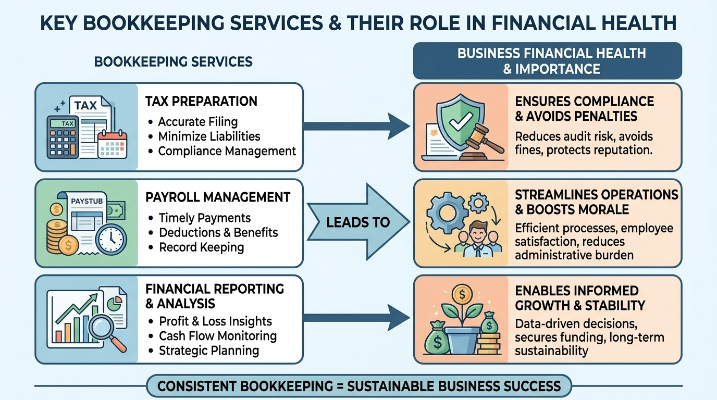
Evaluating transactional complexity is equally important. Companies with numerous daily transactions may benefit from a full-service bookkeeping arrangement, whereas businesses engaging in regular, simpler transactions may only require basic reporting. Additionally, understanding reporting requirements is vital—some businesses might necessitate real-time financial insights, while others may only need quarterly summaries. A thoughtful analysis of operations will help determine the ideal level of service needed, ensuring alignment with overall business objectives and maintaining financial health.
How to Evaluate and Onboard a Bookkeeping Service Provider
When considering potential bookkeeping service providers, small business owners should prioritize a series of critical due diligence inquiries. Start by inquiring about the provider’s credentials: What qualifications do they possess, and are they recognized by reputable accounting organizations? Assess their experience: How long have they been operational, and do they have experience in your specific industry? Also, evaluate their data security measures: What protocols are in place to safeguard sensitive financial data? Lastly, clarify the service levels provided: Are customizable packages available to meet specific business needs, and how effective is their communication and reporting structure?
A comprehensive onboarding process is essential to establish clear expectations and goals for the partnership. This stage not only mitigates potential misunderstandings but also guarantees that both parties are aligned concerning objectives and deliverables. Proper preparation equips business owners with the knowledge needed to select the ideal bookkeeping provider for their needs.
Final Checklist for Choosing the Right Bookkeeping Service
Choosing the right bookkeeping service requires businesses to consider their financial needs, budget, transaction complexity, and long-term goals. Before selecting a provider, it is important to understand available service options, pricing models, and the level of support required.
Businesses should compare providers based on experience, software compatibility, security practices, communication processes, and overall value. Reviewing service agreements carefully and discussing expectations upfront can help prevent misunderstandings and create a more effective working relationship.
By making a thoughtful bookkeeping decision, businesses can maintain accurate financial records, improve financial visibility, and create a stronger foundation for sustainable growth.